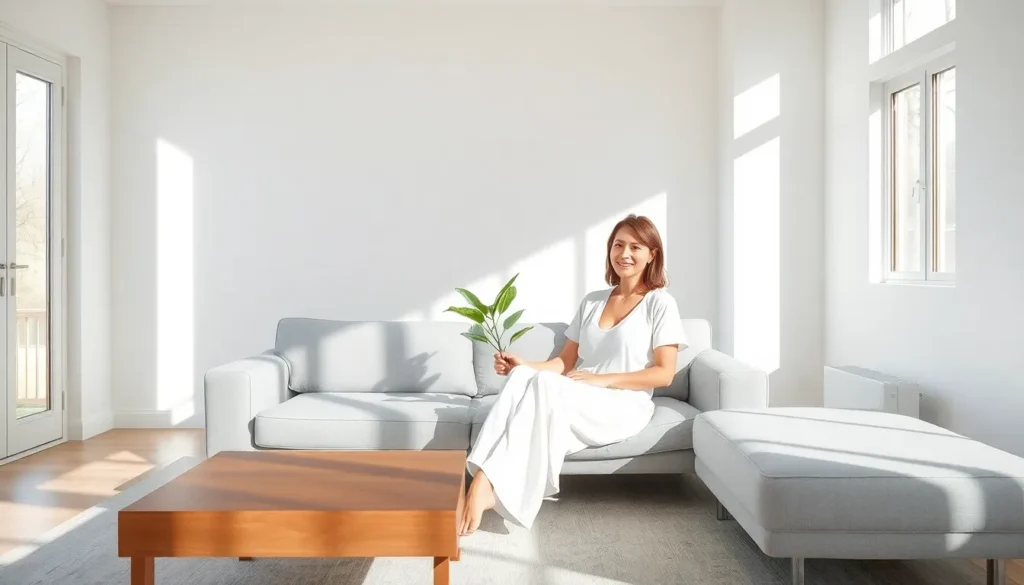
In a world cluttered with distractions and endless to-do lists, minimalist living room design offers a breath of fresh air. Imagine a space where simplicity reigns, and every piece of furniture serves a purpose—no more tripping over that questionable ottoman or dodging decorative knick-knacks that seem to multiply overnight. It’s time to embrace the beauty of less.
Minimalism isn’t just a design trend; it’s a lifestyle choice that brings clarity and calm into everyday chaos. By stripping away the excess, one can create a serene sanctuary that invites relaxation and creativity. So why not trade that overflowing coffee table for a sleek, stylish one? Dive into the world of minimalist living room design and discover how a few smart choices can transform your space into a chic haven that even Marie Kondo would envy.
Understanding Minimalist Living Room Design
Minimalist living room design centers around simplicity and functionality. This approach transforms spaces into serene environments free from distractions.
Key Principles of Minimalism
Simplicity stands as the foundation of minimalist design. Choosing essential furniture enables a clean, organized space. Functionality guides selection; each piece serves a purpose. Neutral color palettes often dominate, creating a calming atmosphere. Light and space also play significant roles; natural light highlights clean lines and open areas. Textures enhance the aesthetic, offering warmth through materials like wood or soft fabrics.
Benefits of Minimalist Design
Clarity emerges as a primary benefit of minimalism. This style reduces visual clutter, promoting relaxation and focus. Minimalist spaces often feel larger due to their open layouts. Moreover, maintenance requires less time and effort, providing convenience in daily life. Sustainability frequently aligns with minimalist principles; fewer items lead to reduced consumption. Embracing minimalism encourages mindful purchases, fostering a more intentional lifestyle.
Essential Elements of Minimalist Living Rooms
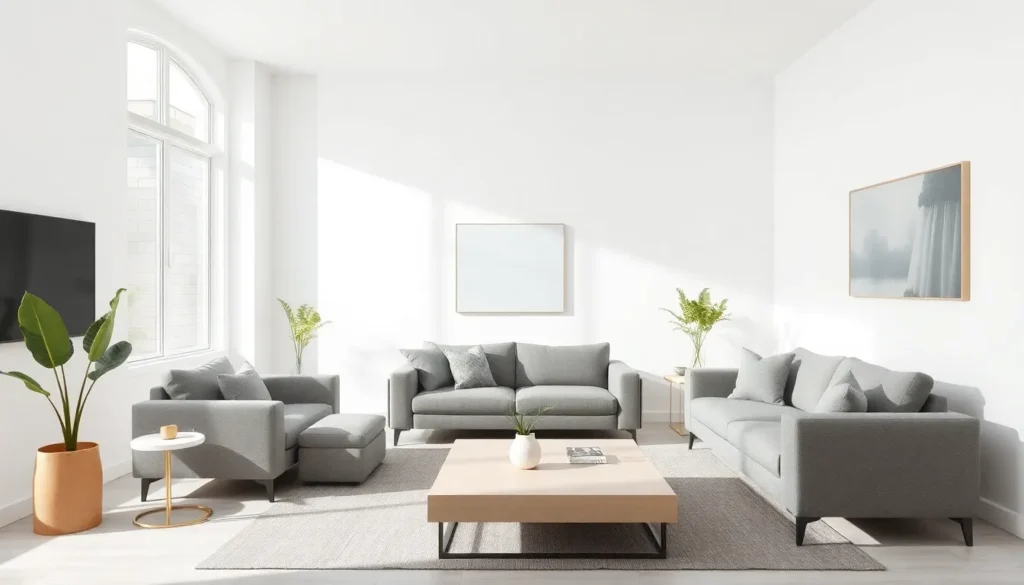
Minimalist living rooms incorporate essential components that foster a tranquil and uncluttered environment. These elements center around simplicity, functionality, and thoughtful design choices.
Color Palette
Neutral color palettes dominate minimalist living rooms. Soft whites, muted grays, and gentle beiges form the foundation. These colors promote calmness and enhance the sense of space. Bold colors can be used sparingly as accents without overwhelming the aesthetic. Using natural hues creates a cohesive look that complements minimalist principles. Light shades also reflect natural light, enhancing brightness in rooms while maintaining simplicity.
Furniture Selection
Selecting furniture requires a focus on functionality and simplicity. Choose sleek, modern pieces that serve a purpose without excess ornamentation. Sofas with clean lines and multifunctional designs often fit this style perfectly. Include a few essential items, such as a minimalist coffee table or a simple chair. Each piece should contribute to the overall aesthetic without adding clutter. Prioritize quality over quantity, finding furnishings that blend comfort with a minimalist appeal.
Creating a Functional Layout
Creating a functional layout is key to achieving a minimalist living room design. Thoughtful arrangement leads to both aesthetic appeal and practical use of space.
Space Optimization Techniques
Maximizing space involves light, multifunctional furniture. Use a sofa bed to accommodate guests without taking up extra room. Consider wall-mounted shelves for storage, keeping the floor clear. Empty surfaces should prioritize essential items, and decorative elements should remain minimal. Rugs can define areas, adding warmth without overwhelming visuals.
Flow and Movement
Ensuring fluid movement is crucial in a minimalist design. Arrange furniture to create clear pathways that encourage movement. Avoid blocking entries and exits. Open spaces, free from clutter, invite natural traffic flow. Use minimal obstacles to enhance the room’s functionality. Patterns and textures can add interest, subtly guiding the eye while keeping the design cohesive.
Decor and Accessories
Decor and accessories play a significant role in achieving a minimalist living room design. Thoughtful selection enhances the overall aesthetic while maintaining simplicity.
Choosing Minimalistic Accessories
Selecting accessories requires attentiveness to functionality and form. Minimalist decor emphasizes items that serve a purpose, such as elegant vases or sleek picture frames. Fewer decorative pieces create a spacious feel, allowing each item to stand out. Focus on quality over quantity, opting for handcrafted items that align with the design ethos. Streamlined designs in decor can evoke calm, while accent colors should complement the neutral palette. Carefully chosen textiles, like a soft throw or a refined rug, add warmth without overwhelming the space.
Incorporating Natural Elements
Natural elements invite tranquility into the living room. Incorporating greenery through low-maintenance plants provides a refreshing contrast to minimal furniture. Wooden accents, such as a simple coffee table, infuse warmth and texture into the design. For instance, a bamboo plant or succulents create life without cluttering surfaces. Sunlight enhances the aesthetic by highlighting natural materials, making it essential to maximize window space. Organic textures and earthy tones help maintain harmony, ensuring decor aligns with the minimalist principle of simplicity.
Embracing minimalist living room design transforms spaces into serene retreats that prioritize clarity and functionality. By focusing on essential furniture and thoughtful decor choices, individuals can create environments that foster relaxation and creativity. This approach not only enhances aesthetic appeal but also simplifies maintenance, making daily life more manageable.
Incorporating natural elements and neutral color palettes supports a calming atmosphere while promoting sustainability through mindful consumption. Ultimately, minimalist design encourages a lifestyle that values quality over quantity, allowing for a more intentional and fulfilling living experience.