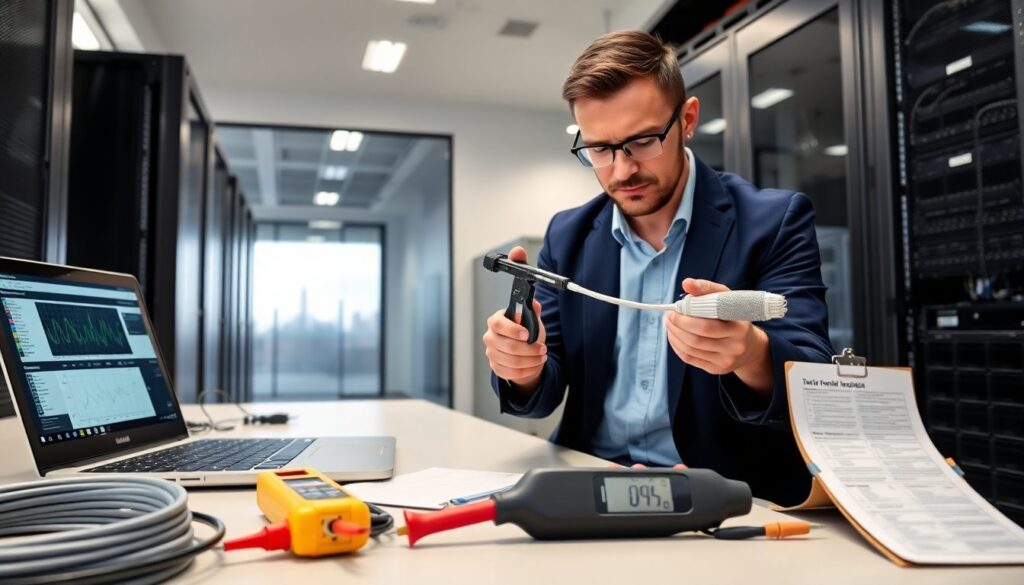
cabtipc2a is a specific cable standard for audio, video, or control links. The reader will learn what cabtipc2a does and who should use it. The guide will show how to pick the right cabtipc2a, install it, test it, and fix common faults. Each step uses clear rules and short checks that a technician or DIY user can follow.
Table of Contents
ToggleKey Takeaways
- CABTIPC2A is a shielded twisted pair cable designed for digital signals needing low noise and stable timing, ideal for cameras, intercoms, and control units.
- Choosing the right CABTIPC2A involves verifying conductor purity, shield type, and jacket rating to match device and installation requirements.
- Proper installation includes careful stripping, correct termination matching device pinouts, and thorough testing for shorts, impedance, and voltage drop.
- Troubleshoot CABTIPC2A issues by checking connectors, grounding, conductor resistance, and shielding continuity to prevent intermittent loss and interference.
- Use weather-rated CABTIPC2A for outdoor runs and document tests for warranty claims or vendor support when problems persist.
- Matching CABTIPC2A specifications to device needs reduces signal dropouts and saves troubleshooting time in mission-critical applications.
What Is CABTIPC2A And Who Should Use It?
cabtipc2a is a cable type that carries digital signals for devices that require stable timing and shielding. Manufacturers label cabtipc2a for use with cameras, intercom panels, and certain control units. The cable uses a shielded twisted pair core. The shield reduces interference. The pair carries differential signals. The jacket meets fire-rating standards in many regions.
An installer will choose cabtipc2a when equipment demands low noise and consistent timing. A systems integrator will use cabtipc2a in short runs inside buildings and in limited outdoor runs where the jacket rating permits. A home user will pick cabtipc2a for a camera link that must stay reliable near power lines.
cabtipc2a fits devices that list it in their manuals. A user should check the device pinout and voltage limits. cabtipc2a does not change device protocols. A device that requires coax or single-ended TTL will not work over cabtipc2a without an adapter or converter. cabtipc2a supports balanced signals and often helps when long runs introduce noise.
The cable costs more than basic multi-conductor cable. The price reflects the shield, tighter impedance control, and certification steps. For mission-critical installs, cabtipc2a can lower troubleshooting time and reduce signal dropouts. For simple, short runs where noise is minimal, a lower-cost cable might suffice. A technician should match cable spec sheets to device requirements before buying cabtipc2a.
How To Choose, Install, And Verify CABTIPC2A Compatibility And Performance
Choose cabtipc2a by comparing three details: conductor type, shield type, and jacket rating. A buyer should confirm that the conductor uses oxygen-free copper or equivalent. The buyer should confirm that the shield is foil plus braid for best protection. The buyer should confirm that the jacket meets the building code for the installation area.
Measure run length before ordering cabtipc2a. The cable can run reliably to certain distances depending on the signal and termination. A systems integrator should consult the device datasheet for maximum run length with cabtipc2a. If the run exceeds the recommended distance, the installer should add an active repeater or use fiber.
During installation, the installer should cut cabtipc2a to length and strip the jacket carefully. The installer should fold back the braid and leave the foil in place when the design calls for drain wire use. The installer should terminate cabtipc2a with connectors that match the device pinout. The installer should avoid nicking the conductor. A nick can raise resistance and cause failures.
Use a continuity tester and a low-frequency megger to verify cabtipc2a. The installer should check for shorts between pairs and between pair and shield. The installer should measure differential impedance when the equipment demands precise matching. The installer should record the measurements for future troubleshooting.
For power over cable scenarios, the installer should confirm that cabtipc2a conductor gauge meets current needs. The installer should calculate voltage drop across the run. If voltage drop is too high, the installer should use thicker conductors or move power closer to the device.
After termination, the installer should perform a smoke test. The installer should power the system briefly and confirm that devices boot. The installer should check signal quality in the device software. The installer should run a longer burn-in test of several hours for critical systems.
If the installer needs to verify cabtipc2a performance under interference, the installer should run the system near typical noise sources. The installer should check for packet loss, frame errors, or audio artifacts. The installer should note patterns and report them to the equipment provider if cabtipc2a shows failure under normal conditions.
Common Issues With CABTIPC2A And Practical Troubleshooting Steps
A common issue with cabtipc2a is intermittent loss. The technician should check connectors first. A loose connector will cause intermittent loss. The technician should reseat and tighten connectors and then test again.
Another common issue is ground loop hum. The technician should measure ground potential between ends of cabtipc2a. If the potential exceeds a few volts, the technician should add an isolation transformer or use a single-point ground. The technician should avoid tying shields to multiple grounds.
A damaged conductor will show high resistance. The technician should use a resistance meter to test each conductor of cabtipc2a. The technician should replace any cable where resistance exceeds the device limit.
Signal reflections can cause errors. The technician should verify terminations and impedance. The technician should use matched connectors approved for cabtipc2a. The technician should replace suspect connectors and retest.
Moisture ingress can degrade cabtipc2a. The technician should inspect jackets and seals for cracks. The technician should replace any section that shows water damage. The technician should use weather-rated cabtipc2a for outdoor runs.
If cabtipc2a fails under EMI, the technician should check shield continuity. The technician should ensure that the shield connects properly at the intended end. The technician should also route cabtipc2a away from power runs and motors. The technician should add ferrite cores if needed.
When diagnostics show protocol errors, the technician should capture packets or logs from the devices. The technician should compare error counts before and after replacing cabtipc2a. The technician should test with a known-good cable to isolate the problem to cabtipc2a.
If the installer cannot fix the issue, the installer should document the tests and contact the cable vendor. The vendor can advise on warranty replacement for cabtipc2a or suggest a certified alternative cable.