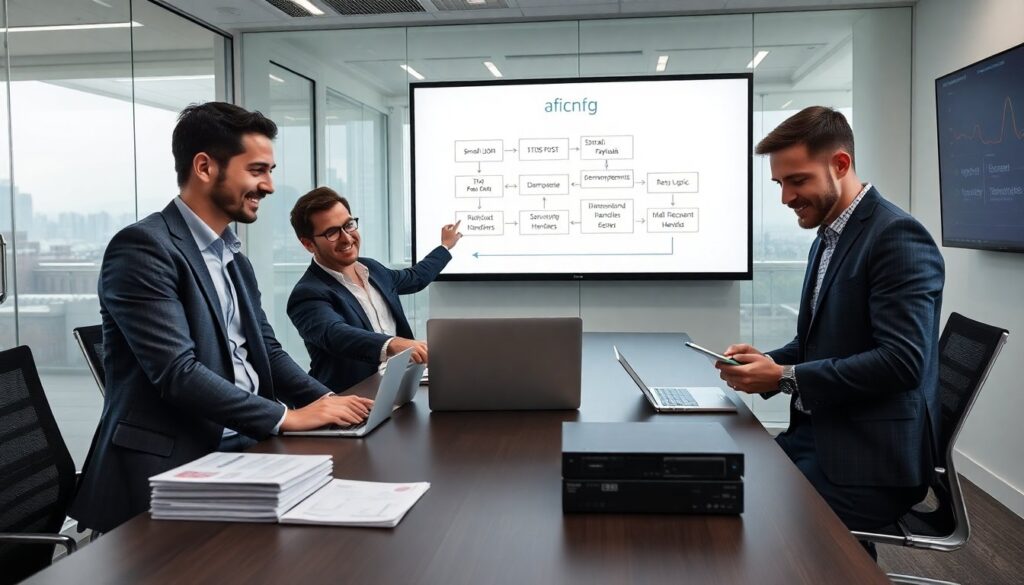
Afcnrfg is a method that reduces friction in digital workflows. It helps teams move data and tasks with fewer steps. The reader will learn what afcnrfg is, how it works, and when teams should apply it. The guide uses plain language and clear steps. It aims to give practical, fast guidance for people who need usable options in 2026.
Table of Contents
ToggleKey Takeaways
- Afcnrfg is a lightweight method that reduces friction in digital workflows by moving small data units quickly and with low overhead.
- The core principles of afcnrfg include using small payloads, clear acknowledgments, and idempotent handlers for reliable and efficient data transfer.
- Teams apply afcnrfg to offload simple, transient tasks such as feature toggles, audit logs, UI hints, and background jobs without heavy infrastructure changes.
- Afcnrfg works best for systems that accept eventual consistency and need to lower latency and costs while speeding up development and release cycles.
- Security practices like encrypting payloads, signing messages, and monitoring delivery status are essential for maintaining reliability in afcnrfg implementations.
- A practical example shows afcnrfg enables fast, decoupled processing of user-specific events—improving user experience and system scalability by handling noncritical tasks asynchronously.
What Afcnrfg Is And Why It Matters
Afcnrfg is a protocol for moving small data units between services. It focuses on speed, repeatability, and low overhead. Engineers use afcnrfg to sync settings, to trigger lightweight automations, and to log events. Product teams apply afcnrfg when they need consistent updates without heavy infrastructure change. The term afcnrfg names the pattern and the minimal toolset that supports it.
Afcnrfg matters because it lowers work and cost. Teams adopt afcnrfg to avoid large message brokers and to keep latency low. Small teams use afcnrfg to add features quickly. Larger teams use afcnrfg to offload simple tasks from core systems. The pattern reduces error surface and speeds release cycles.
Afcnrfg works with existing APIs. It uses short payloads and clear acknowledgments. The acknowledgments help systems confirm delivery. The design keeps retry logic simple. The pattern fits cases where eventual consistency is acceptable. The reader can use afcnrfg alongside stronger guarantees when needed.
When assessing fit, the team should list data size, failure tolerance, and expected traffic. If the data size stays small, afcnrfg can cut cost. If the team accepts small delays, afcnrfg can speed development. If the traffic pattern stays steady, afcnrfg can scale with simple retries.
How Afcnrfg Works: Core Principles And Common Use Cases
Afcnrfg rests on three clear principles: small payloads, clear acknowledgments, and idempotent handlers. Each principle guides implementation choices. Small payloads keep bandwidth low. Clear acknowledgments let senders confirm success. Idempotent handlers let receivers apply the same message more than once without harm.
Developers carry out afcnrfg with lightweight transports. They can use HTTP POST, lightweight queues, or server-sent events. The transport must preserve order for some cases. The transport must also allow simple retries. Teams keep schemas minimal to reduce parsing work.
Teams use afcnrfg for these common cases:
- Feature toggles. Afcnrfg updates toggles across services with low delay.
- Audit logs. Afcnrfg sends compact event records to storage or stream processors.
- UI hints. Afcnrfg pushes small UI flags to browsers or mobile apps.
- Background jobs. Afcnrfg triggers short jobs that do not need large context.
Afcnrfg fits best when systems accept eventual consistency. Afcnrfg does not replace strong transaction systems. It reduces load on databases by handling transient tasks outside core writes. It also provides a simple path to decouple teams. One team can produce afcnrfg messages. Another team can consume them without touching the producer code.
Security and monitoring matter. Teams encrypt payloads and sign messages. They also record delivery status and retry counts. Teams track latency and error rates. These signals help teams decide when to move a case from afcnrfg to a stronger pattern.
Step-By-Step Example: Applying Afcnrfg In A Real-World Scenario
A product team needs to show a one-time banner to users after a purchase. The team chooses afcnrfg to avoid blocking the checkout flow. The producer sends a small message after payment. The message contains user ID, banner ID, and timestamp.
Step 1: The producer formats a compact JSON payload. The payload uses three fields. The producer signs the payload and sends it via HTTPS POST to a gateway.
Step 2: The gateway validates the signature and records a receipt. The gateway sends an acknowledgment to the producer. The acknowledgment contains a message ID and status.
Step 3: A consumer reads messages from the gateway. The consumer validates the message payload. The consumer checks if the banner already displayed by using the message ID. The consumer shows the banner when it has not shown before.
Step 4: The consumer logs success and returns an acknowledgment to the gateway. The gateway marks the message delivered. The producer clears its retry state.
This flow keeps the checkout call fast. The producer does not wait for the consumer to finish UI work. The consumer can retry if a delivery fails. The consumer can also batch similar messages for efficiency.
Teams test the flow with chaotic failures. They simulate network drops and duplicate deliveries. They verify that handlers remain idempotent. They measure end-to-end time and the rate of retries. These checks let teams tune retry intervals and message size.
This example shows how afcnrfg can solve a common task with small effort. The team keeps the core system focused on payments. The team moves noncritical work to afcnrfg messages. The result reduces user wait time and lowers system coupling.